
How to choose CBD oil: percentages, milligrams, volume and real price

- 04 July 2026 14:38:00
- Reviews: 0
- Views: 199
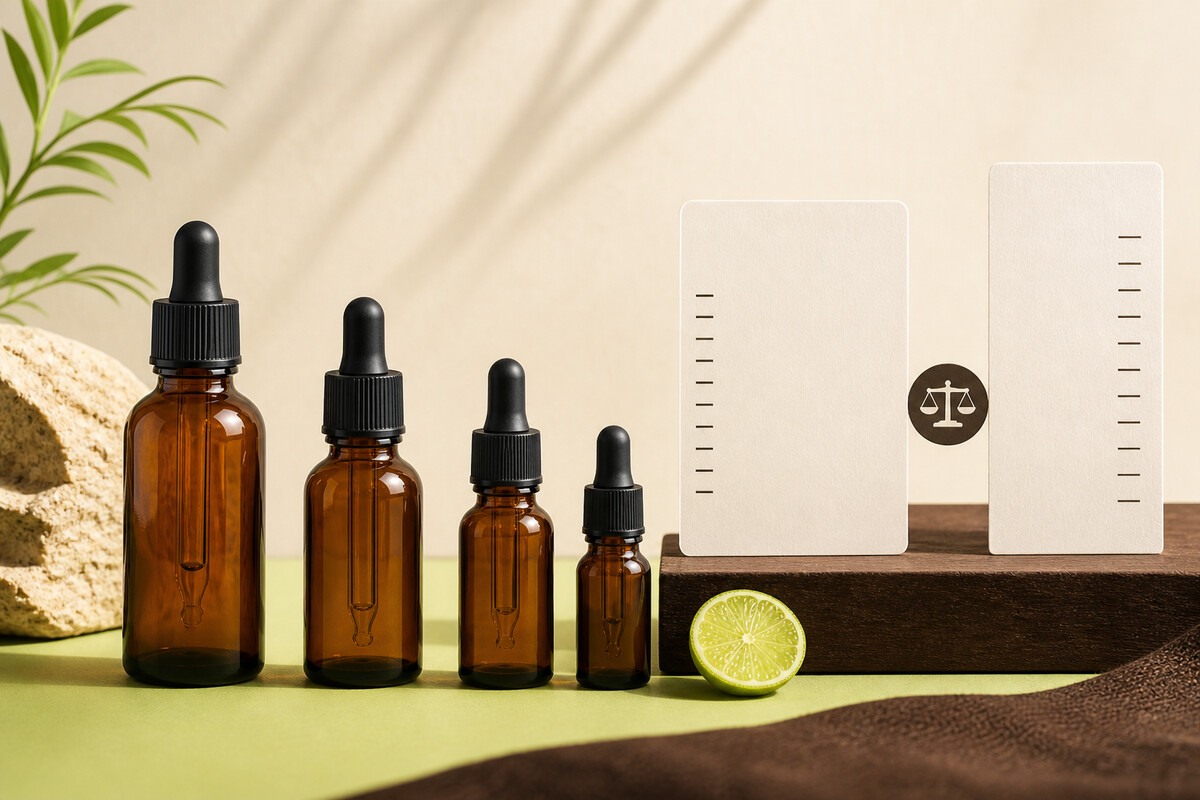
“Should I get 10% or 20%?” “Why does one 10 ml bottle look more expensive than another 30 ml?” are the two questions that CBD oil buyers often ask themselves. The quick answer is simple: don’t just choose based on the big number on the label. First, compare the oil’s format, total CBD content in milligrams, bottle size, and price per unit.
This approach eliminates confusion before you even place an order. You'll be able to tell the difference between a more concentrated small bottle and a larger supply, understand when percentages are really useful for comparison, and when mg is the answer. Below is a practical chart that will make it easier to choose a CBD oil that fits your routine and budget.
Quick guide to choosing CBD oil
Before comparing products, look at four things: format, CBD content in milligrams, volume in milliliters, and total cost of the bottle. These four things give you the real picture, not just a pretty number on the front label.
- The format helps narrow down the choice: broad spectrum and isolate are different designations, and they should not be mixed up in the same comparison just because of a similar percentage.
- Milligrams indicate the total amount of CBD if the manufacturer has explicitly stated it on the packaging or in the product name.
- The volume dictates the size of the bottle and how long it will be convenient to use in your scenario.
- Price only makes sense when compared to the amount of CBD and volume. A cheaper bottle doesn't always mean a better deal, and a larger amount doesn't always mean a larger supply.
It is convenient to start with the format because it is a choice of the nature of the product. After that, you can compare the numbers within similar options. For example, it is more logical to evaluate broad spectrum 10% oil next to other broad spectrum options, and isolate - next to isolate.
Percentage on the label: what it really helps to understand
A 10% or 20% mark is immediately eye-catching because it gives a quick idea of the concentration within a particular product. However, a percentage alone does not answer all practical questions: it does not indicate the volume of the bottle, does not replace the total amount in milligrams, and does not explain the format of the oil.
The most common mistake is to automatically convert a percentage to a specific mg amount. This should not be done unless the total CBD amount and volume are explicitly stated by the manufacturer. The basis for the calculation and labeling may vary, so it is more honest to rely on specific data from the name, packaging, or description.
Percentage works well as a first filter. Once you've decided you're looking for a compact bottle in a specific format, 10% and 20% help you quickly sort through the options by concentration. But it's not enough to estimate cost and stock.
When 10% seems like a logical choice
The option marked 10% can be convenient when you want to start with a more understandable concentration level and not overload the choice with dozens of parameters. The CBDUA catalog has CBD oil broad spectrum 10% in a 10 ml bottle . This is an example where the format, percentage and volume are already visible from the product name.
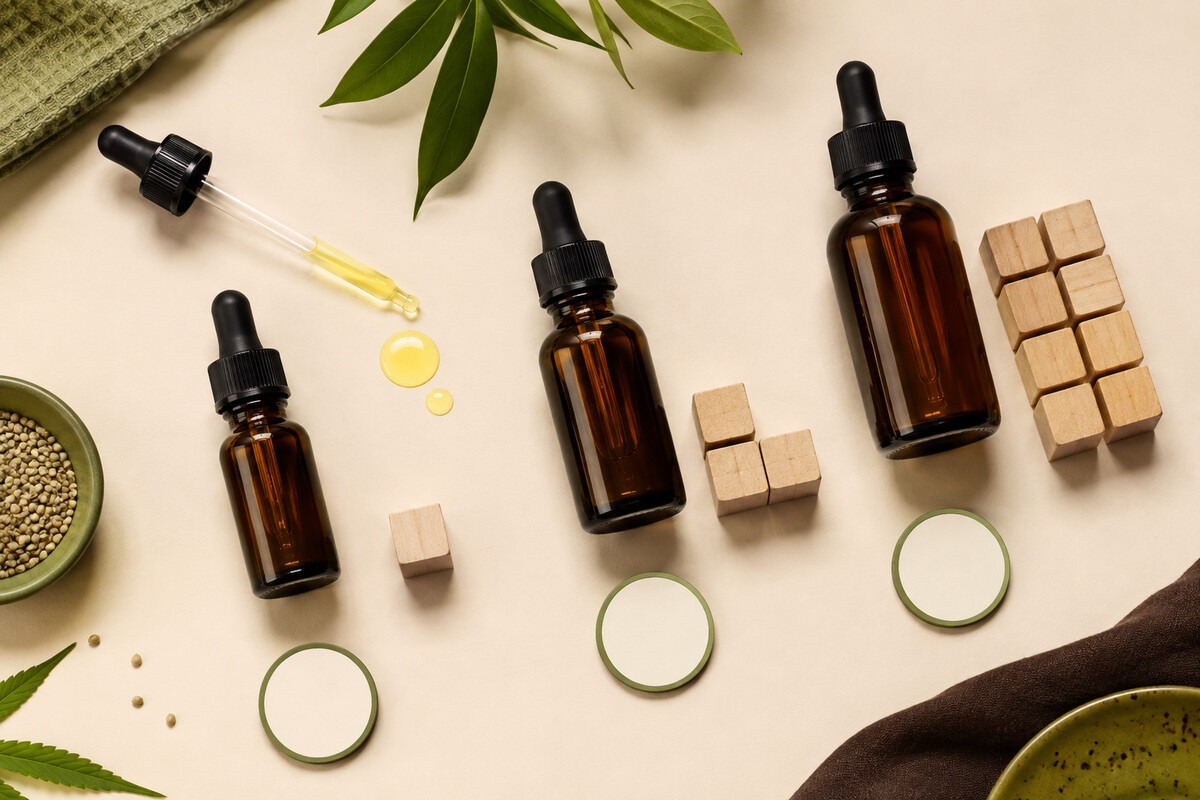
Such a bottle is appropriate to consider for a buyer who values compactness or wants to first get acquainted with the broad spectrum format. There is no need to attribute properties to it that are not in the description: to make a decision, it is enough to compare the 10% mark, the volume of 10 ml and the current price on the page.
What changes when you look at 20%
The 20% mark indicates a different level of concentration compared to 10% within such labels. However, it does not automatically make the product better for everyone. Some people are more interested in a compact format, some in a specific amount of CBD in a bottle, and some people choose isolate first and foremost.
CBD oil isolate 20% in a 10 ml bottle allows you to see why the name does not boil down to a single number. It simultaneously states isolate, 20% and 10 ml. You can compare this option with broad spectrum 10%, but it is useful to honestly name the difference: both the format and the concentration labeling are different.
Milligrams of CBD: the most convenient number for sober comparison
When the label explicitly states the total amount of CBD in mg, the buyer has an accurate basis for comparison. This number shows how much CBD is claimed for the entire bottle. It is especially useful if you are considering bottles of different volumes.
Example with specific data: CBD oil isolate 1000 mg / 30 ml . The name already contains two key parameters: the total amount of 1000 mg and the volume of 30 ml. It is with this pair of data that you can correctly calculate the approximate amount per 1 ml: 1000 mg divided by 30 ml, i.e. approximately 33.3 mg/ml.
This calculation is not a dosage and does not suggest a personal method of use. It is only needed for the arithmetic of the purchase. Thanks to it it is easier to understand what exactly you are comparing: the price per bottle, the price per total amount of CBD, or the concentration per milliliter.
Why the inscription 1000 mg should not be evaluated separately from the volume
A large milligram number looks impressive, but without volume it is incomplete. A 1000 mg/30 ml bottle and a generic product with the same total amount of CBD in a different volume will have a different number of mg per ml. That is why volume is always next to the total amount.
A good rule of thumb is: if you see mg, look for ml. If you see ml, check to see if the total CBD content is listed. If one of the parameters is missing from the available data, don’t try to guess it by percentage or name.
Bottle volume: it's about supply, convenience and speed of use
Volume does not determine the quality of the oil, but it greatly affects everyday convenience. The 10 ml bottle is more compact, it is easier to take with you. The 30 ml version has a larger volume and may better suit the buyer who does not want to return to the selection and order often.
There is no one-size-fits-all solution. A small volume is appropriate when you are comparing the format, taste, or overall impression of a particular variant. A larger bottle is attractive when you need a stock and you already know what you want to buy.
You shouldn't compare 10 ml and 30 ml by shelf price at a glance. A 30 ml bottle can naturally cost more in absolute terms, because it has a larger volume. The question for the buyer is different: how much does 1 ml cost and how much does 1 mg of CBD cost, if both figures are stated.
How to calculate the real price without complex math
The real price of CBD oil is not just the amount on the product page. For a fair comparison, it is enough to make two simple calculations. The first shows the price per 1 ml, the second - the price per 1 mg of CBD. The second option is only possible where the total amount of CBD in mg is directly indicated.
Price per 1 ml
The formula is: the price of the bottle divided by its volume in ml. If one bottle contains 10 ml and the other 30 ml, this figure removes the misleading impression of a different total price.
The price per ml is useful for comparing products of the same size or similar composition. However, it does not tell you how much CBD is in each milliliter. Therefore, you should not base your final decision on this number alone.
Price for 1 mg CBD
The formula is even simpler: the current price of the bottle divided by the total amount of CBD in mg. If the description or name says, for example, 1000 mg, you can compare the cost per milligram to another product that also explicitly states the total amount in mg.
Don't compare the price per mg between products that don't list this quantity. In such a situation, accuracy is more important than the desire to quickly find a winner. It's better to leave the comparison at the level of format, volume, percentage, and affordability.
Imaginary calculation example
Let's say the price of a 1000 mg / 30 ml bottle is X UAH. Then the price for 1 ml is X divided by 30, and the price for 1 mg is X divided by 1000. Substitute the current price from the product page and you will get your own exact comparison without assumptions.
This is more useful than the phrase "this oil is more expensive." Only the starting amount may be more expensive, while the volume or the declared amount of CBD sometimes changes the picture. A few steps on the calculator often save more than a hasty decision.
Broad spectrum or isolate: choose the format first
Broad spectrum and isolate are different format designations, so they should be considered as separate criteria, not as small print under the percentage. If you already know what format you are looking for, the choice becomes shorter and more transparent.
For a buyer who wants broad spectrum in a compact volume, a guideline might be 10% / 10 ml. For someone looking specifically at isolate, the catalog has options of 20% / 10 ml and 1000 mg / 30 ml. The decision here is not about “better” or “worse”. It’s about which format name meets your request, and which numbers make the purchase understandable.
Don't substitute a number for a format. Two oils may have the same volume but different labels. Conversely, one format may be available in different volumes or with different labels. First, formulate a format for yourself, then open two or three relevant products and compare them based on the data.
Three scenarios in which the choice becomes clearer
A small bottle is needed for the first acquaintance with the format
Pay attention to the 10 ml volume and don't try to cover the whole range at once. Then choose between broad spectrum 10% and isolate 20% depending on which format you are looking for. Then check the current price and see if this concentration mark is right for you.
I want to compare purchases based on specific numbers
Look for a product that lists both the total mg and the volume in ml. For isolate 1000 mg / 30 ml, you can calculate both the mg/ml and the price per 1 mg when you see the current price. This is the most convenient way for someone who doesn't like to choose "by eye".
Need more volume to order less often
Look at 30 ml as a practical storage size. Don’t jump to conclusions just because the bottle is larger: compare the total CBD content, isolate format, and total amount. If the parameters are right for you, a larger volume may be easier to carry around than multiple compact bottles.
Mistakes that make CBD oil seem more expensive or weaker than it is
The first mistake is to look only at the percentage. 20% gets more attention than 10%, but without the volume, format, and mg count, it's only part of the description. The percentage is useful, but it doesn't replace all the other data.
The second is to compare the price of different bottle sizes. A 30 ml bottle and a 10 ml bottle cannot compete fairly based on the price tag alone. Calculate the cost of 1 ml, and if there is a declared amount of CBD, the cost of 1 mg.
The third is to try to derive milligrams from a percentage yourself. If the manufacturer has not indicated the total amount of CBD in mg, this conclusion should not be made. Accuracy in this matter is more useful than beautiful, but unverified arithmetic.
Fourth - mix broad spectrum and isolate into one group, not noticing the format. Start filtering from it. The comparison becomes much more honest when you first choose the type of oil, and only then calculate the volume and price.
Convenient checklist before ordering
- What format are you looking for: broad spectrum or isolate?
- Which volume is more convenient for you: 10 ml for compactness or 30 ml for a larger supply?
- Does the product directly state the total amount of CBD in mg?
- Are you comparing similar formats, not random different oils?
- What will be the price for 1 ml?
- If mg is known, what will be the price for 1 mg?
- Are you satisfied with the current price according to the parameters you need?
This list takes a minute, but it removes most of the confusion. You don’t need to look for the one-size-fits-all “strongest” or “best value” CBD oil. You need to find one that matches the format, the numbers, and your buying scenario.
Where to start choosing CBDUA
Open the CBD oils category, first select the format, and then compare bottles that are similar in purpose. For a quick comparison, you can take broad spectrum 10% / 10 ml, isolate 20% / 10 ml and isolate 1000 mg / 30 ml: each option has a different combination of format, concentration labeling, volume or declared amount of CBD.
The final choice becomes easy when you are not chasing one big number. Check the format name, find ml, compare mg where they are indicated, and calculate the price in the measurement you need. Then the CBD oil will be chosen not at random, but according to criteria that are clear to you.