
Does magnesium reach the brain: what the promises on supplement labels mean


- 22 October 2026 08:25:17
- Reviews: 0
- Views: 78

The words “for the brain” on a magnesium bottle easily create a simple expectation: take a supplement and the mineral will supposedly go where you need it for clear thinking and focus. In fact, it’s more useful to look at the form of the compound, the method of administration, and how convenient it is for you to maintain a regular diet.

KAL Magnesium Fully Chelated - magnesium chelate (bisglycinate), 270 tablets
Chelated magnesium in the form of bisglycinate is one of the most popular formats of mine...
Buy →On the shop website
Magnesium is involved in the transmission of nerve signals, but a loud inscription on the label does not turn any supplement into a special product for memory or concentration. We understand why bisglycinate, taurate and threonate should not be evaluated only by the promise of "for the brain" and how to choose a format without unnecessary expectations.
What's really behind the phrase "magnesium for the brain"?
The brain is protected by the blood-brain barrier, which regulates the exchange of substances between the bloodstream and nervous tissue. Therefore, the mere presence of magnesium in a food or supplement does not mean direct, rapid, and predictable delivery of the mineral to a specific area of the brain.
BBC News Ukraine, in an article from October 26, 2025, reminds us of the fundamental role of magnesium in the functioning of the nervous system and at the same time the popularity of overly broad promises around supplements. For the buyer, this is a good guideline: the mineral is important for the body, but the advertising slogan is not a separate characteristic of the composition.
The words “bioavailable,” “neurosupport,” or “for cognitive function” are often found on labels. Bioavailability describes the way a compound is absorbed, not a guarantee of a noticeable effect on memory, thinking speed, or mood. These are different things, and they should not be confused.
Why the name of the form of magnesium matters
The jar does not contain abstract magnesium, but a specific compound. After ingestion, it dissolves, and the body absorbs magnesium ions. In practice, the form primarily affects the composition, format of the product, and individual tolerance.
Threonate and Taurate: Don't confuse the name with the promise
Magnesium L-threonate is often touted as a brain supplement, while taurate is associated with an active lifestyle. These names may be a reason to read the ingredients more carefully, but they don't tell you exactly how a person will experience the results of the supplement.
For now, it is correct to perceive these forms as different chemical compounds, and not as targeted delivery of magnesium. If the product description does not have clear parameters of serving size, form, and method of administration, a bright promise on the front label does little to help with the choice.
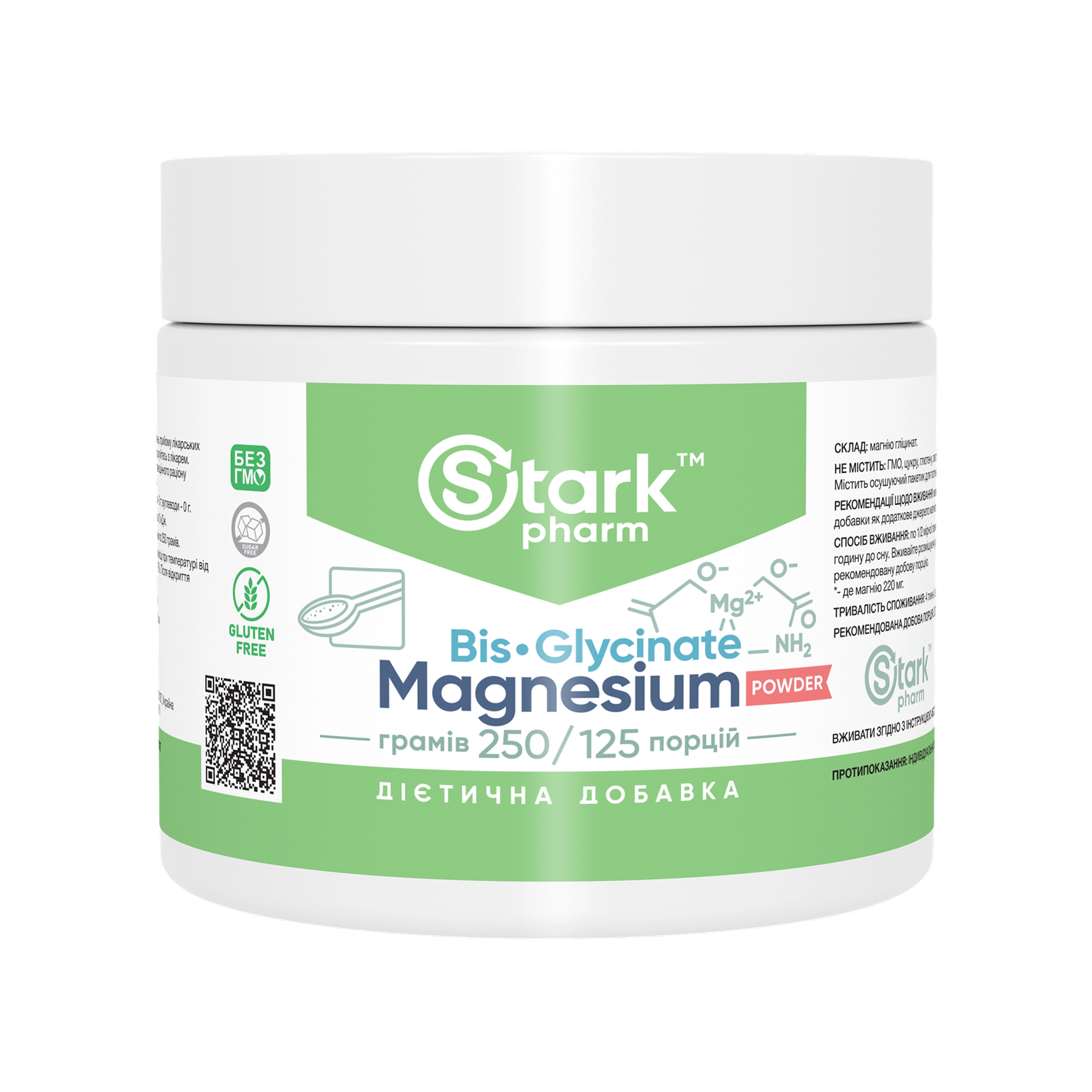
Stark Pharm Magnesium Bis-Glycinate - magnesium bisglycinate powder, 250 g
Powdered magnesium bisglycinate from Stark Pharm is a chelated form of the mineral, where...
Buy →On the shop website
Bisglycinate: Chelated form for daily use
Magnesium bisglycinate is a chelated form in which the mineral is bound to the amino acid glycine. It is often chosen by people who value a convenient format for their daily diet, especially compared to simpler inorganic salts.
This does not give grounds to call bisglycinate “magnesium for the brain.” But such a name immediately explains what compound you are buying, which is much more useful than universal advertising formulas.
Two formats of bisglycinate: tablets or powder
For those who like a predictable, no-mix regimen, KAL Magnesium Fully Chelated - magnesium chelate (bisglycinate), 270 tablets will come in handy. 270 tablets in a bottle, and the manufacturer recommends taking three tablets with a meal or with a glass of water. With this regimen, the supply lasts for approximately 67-90 days, depending on the number of tablets per day.
This option is worth considering if you want a tablet chelate form and a large bottle. According to the manufacturer, the product is suitable for a vegan diet.
When swallowing pills is inconvenient or you want to measure out a portion yourself, a logical alternative would be Stark Pharm Magnesium Bis-Glycinate - magnesium bisglycinate powder, 250 g . Its composition contains one active compound - magnesium glycinate. The recommended serving is 2000 mg of powder, approximately half a measuring spoon, and a 250 g jar is approximately enough for 125 servings.
The powder is dissolved in a glass of water. The manufacturer recommends taking it an hour before bedtime. There is a desiccant bag inside the jar - it keeps the product dry and is not intended for consumption.

Lifeable Calcium Magnesium & Zinc + Vitamin D Kids - Calcium, Magnesium, Zinc and Vitamin D3 for Children, 60 Chewables
Lifeable Kids Chews combine four nutrients in one serving: calcium, magnesium, zinc and v...
Buy →On the shop website
A separate scenario for children's diets
A children's supplement should not copy the logic of an adult powder or large tablets. Lifeable Calcium Magnesium & Zinc + Vitamin D Kids - Calcium, Magnesium, Zinc and Vitamin D3 for Children, 60 Chewables combines magnesium with calcium, zinc and vitamin D3 in a chewable format. The manufacturer indicates a standard serving - two candies per day, so the package is enough for 30 days.
This option is chosen for a child who is uncomfortable swallowing regular pills. The composition contains fish gelatin from tilapia, so this detail should be taken into account when choosing. Here the key advantage is not in the loud statement about the brain, but in the format and combination of nutrients in one serving.
How to read a label without the marketing noise
- Look for the full name of the compound: bisglycinate, citrate, taurate, threonate, or other form.
- Compare not only the large text on the package, but also the recommended serving size, format, and number of servings in the jar.
- Choose tablets if you value a ready-made regimen, or powder if you are more comfortable dissolving the supplement in water.
- Take mentions of memory, sleep, or focus as marketing context, not as the main purchase criterion.
- Check the composition of complex foods, especially when they are intended for children's diets.
Practical conclusion
Magnesium doesn’t become a “brain supplement” just because of the wording on the label. The differences between forms do matter, but primarily for composition, ease of administration, and personal choice of format.
For a daily chelated diet, you can choose KAL in tablets or Stark Pharm in powder. For a children's format with several nutrients, Lifeable chewable candies are appropriate. This approach puts clear product characteristics first, rather than a promise that cannot be verified by a single inscription on the can.